Showing posts with label Writing. Show all posts

Saturday, 27 February 2016

The Alefim, second legion, called the bulls of Apis, the wrath of Moloch and the Taurii

Hi, this is Olvebanipal again with some more background information on the second legion. This time we will look at the early days of the crusade, and Apis' most loyal soldiers, the Bekhrum Sharruti.

The Bull meets his father

Apis quickly accepted his new role as head of a legion of super-humans. During his years of expanding the Sargonite Empire, he had come to view himself as more than a man. He now ruled as the god-king of hundreds of thousands. His word was not only law; it was the very fabric of his subjects’ universe. The first wars of expansion were extraordinarily brutal and vicious. Entire populations were skinned, blinded, crucified or deported for resisting his laws. Word of his atrocities spread, and many cities surrendered even before he could reach their walls.

Although Apis was described as a bloody-handed tyrant, he was also praised as a warm, friendly man, and his subjects loved him. He would give distribute the spoils of war to his citizens, and walk the slums of newly conquered cities. Here he would feed the poor, and adopt many orphaned children. This made him popular amongst the common people, and secured a stable empire. The people knew that he was as caring as a father to those who followed him, but a savage, cruel master to any who opposed him.


When the primarch of the second met the Emperor, he did it as Apis-bel-nisheshu, god-king of the Sargonite Empire. The Emperor of the Imperium of Man was an inferior, not a god. But Apis could see the advanced technology and great power the Emperor wielded, and decided to join his father in the crusade. This would give an army with which to later dethrone his creator. From the moment Apis met his father, he was intent on taking his role.
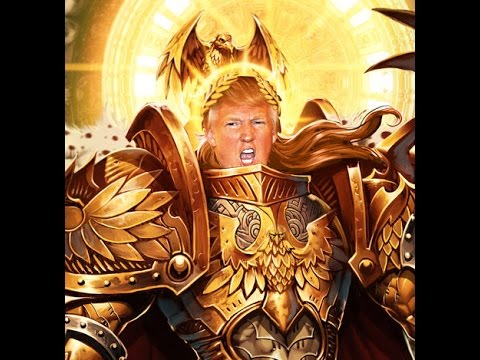
How Apis saw the Emperor
It is curious that the Emperor accepted the apparent fanaticism in his second son, but as with the flaws of his other sons, who knows what plans he had for him. The Taurii, or Alefim in Sargonite, became one of the most fearsome legions in the Imperium of Man, but their loyalty to their primarch was much stronger than to that of their Emperor. The most loyal of Apis’ subjects could be found in the Bekhrum Sharruti, the hand-picked men of the king.

The Bekhrum Sharruti

Excerpt from the scriptures of Magos Historicus Hadradatus Archos
[…]To his enemies, Apis was known as Moloch, the raging, black bull of destruction, heralding the coming of the end. Only those who loved him called him by his true name. This duality in the view on the primarch of the Second, also survived through the crusade, and the enemies of the Imperium learned to fear the coming of Moloch.

It may seem strange that this towering, horned figure of terrible myth was also loved by many. The White Bull became the patron saint of the oppressed and downtrodden. He became the father of the fatherless, the protector of the weak, or so he wanted the people to believe. To his fellow primarchs, he was an enigma. One day a caring brother, the other day a tornado of hate and fury.
We have no sources other than the interviews with his surviving legionnaires. There is especially one such interview, or confession rather, that is especially intriguing: the tale of Apisreshishi, “Apis-has-lifted-my-head,” Rab-kisri of the Bekhrum Sharruti.
Source: https://images-cdn.fantasyflightgames.com/ffg_content/Dark-Heresy-2nd/core-book-previews/preview-2/DH19-art-adeptusadmin.png

Excerpt from confession of Apisreshishi of the IInd Legion

++++++Subject: Apisreshishi, former legionnaire of the second legion+++++
++++++Interviewer: [Redacted]+++++
Subject description: The legionnaire sits bound in great chains. His eyes dart nervously continuously, never resting. His long, braided, black hair is wet, and his face is streaked with sweat, in spite of the room’s low temperature.

[Redacted]: So, you have finally come to your senses? Are you ready to confess your sins, legionnaire?

[09.35 seconds pause]

Subject: I… I will tell you my story. [Subject’s eyes continue to scan the room as he talks.] I was born in the city-state of Uruk, in the Karakalla delta. I was the third son of … [subject pauses, he looks as if he tries to remember something. After 05.14 seconds, he closes his eyes, his brow furrowing.] …it does not matter…
When my father left for war, my mother tried to keep us all fed, but… it…. It was hard. Word of my father’s death… It… [The subject closes his eyes. His manacled hands reach for his face, but cannot reach it.]
I think some of my siblings died that winter. We were left on our own for most of the time, as mother was… away finding food. I think… I think we had a neighbour, who would come into our room at night… I don’t know… [The subject clenches his fists.]

[Redacted]: How old were you when your father died?

Subject: I think I was about ten summers… I… I think father gave me a wooden horse for my birthday.

[Redacted]: Was it about this time that Apis and the Sargonites conquered Uruk?

Subject: Yes… He came in the winter, outside of the war season. The streets… red…. He came as a god of fire and death… furious... without mercy…. [The subject’s eyes freeze for a fleeting moment, as if he is somewhere else.]
I could not find my mother… I.. I think… I think he came for us when we were looking for her.

[Redacted]: Who? Apis?

Subject: Yes… Or Moloch as we called him, the rampaging bull of chaos and destruction… He… He came for us though the smoke. At first he seemed a horned demon… His huge silhouette, an omen of death. [The subject’s gaze focuses on the table in front of him.] But as he came closer… we could see his eyes. He was smiling. He was smiling at us, with the kindest, warmest eyes I have ever seen. [The subject’s eyes turn to [redacted]. We knew who he was then.

[Redacted]: What do you mean? You knew he was the lord of Sargon?

Subject: [The subject’s voice is firm. His eyes are focussed and clear. He takes a deep breath.] We knew he was our only true father. He had always been our father, and now he had come for us…

Forged in the flames of war

The Bekhrum Sharruti, the handpicked men of the king, were more than mere legionnaires. When Apis conquered a city, he would put the men and women to the sword, but he would spare the children. Both the girls and boys were trained to become rulers in the new divine kingdom of Sargon. Contrary to tradition, the girls became learned scribes, priestesses and bureaucrats. The boys became soldiers, and the fiercest of them was initiated into the brotherhood of the Bekhrum Sharruti.
These orphans were sure that Apis was a god and their true father. They were his most loyal followers, and when the primarch of the Second was reunited with the Emperor, the Bekhrum were the first to receive the gene seed.

It is very important to remember that the priesthood of Mars were especially intrigued by the rediscovery of Sargon, as it was the source of an incredible potent metal. This bronze-like substance became known as Sargonium in High Gothic, and the Mechanicum soon established close relations to Apis and the Second. In the fires of the forges of Nimrod, the tech-savants of Mars forged magnificent armours and weapons for the Second legion. The Bekhrum Sharruti received the finest of these marvels.

The power armour of the Bekhrum Sharruti was incredibly strong, forged with sargonium.  Their helmets were moulded in the shape of a fierce bull, to honour their father. The Bekhrum favoured close combat, where they wielded their power glaives with terrible fury. In the trenches they formed solid phalanxes of glaives and shields and cut through the enemy with ease.

What we learn from the interview with Apisreshishi, is not only his great love for his father and god, but also the purpose of the Bekhrum. They were not the veterans or the most elite troops of Apis, but aspirants to the King’s Guard. The Bekhrum were fanatical warriors, but only some of them received the honour of donning the royal terminator armour. We can see that Apis’s heresy was apparent already from the start.

So in the same way that the Vlka Fenryka hone their youngest in the flames of combat, so did the Taurii. The lessons and indoctrination in the Bochum made some of the finest legionnaires in the Imperium of man, but this heresy was soon to be put down.

So that was it for now. Feel free to leave questions and comments below.

- Olvebanipal

Friday, 5 February 2016

The Athu Elami

Hi, this is Olvebanipal. This time I’ll talk a bit about my take on the BaC cataphractii.

As I’ve stated in an earlier post, I already had ten Space Wolf terminators lying in their sprues. When the Betrayal at Calth boxed set was released, I decided that I wanted to go for the Pride of the legion ROW. It’s easy to field for beginners, as you don’t need too many models. I haven’t converted these guys too much, but I kitted them out with combi-meltas, some of which I took from the tactical sprue. The rest I magnetized with the combi-weapon set from Forge World. I can now choose which combi-weapon to use. The hand of the BaC cataphractii fits ok with the weapons from Forge World. Just use a knife and some patience.


It really was a bitch to fix, and I’m not really satisfied with the result, as the barrels of the bolters don’t align properly. Learn from my mistakes. I’m too much of an easy-way-out-guy.  
I would fall to the easy
path of the dark side
in the blink of an eye.

Anyway, here is some background fluff for this unit.

The Athu Elami

The Athu Elami, meaning the brothers of Elam, was one of the few surviving units from the great chapter of Elam. This chapter’s strength was in its deployment of fast speeders, jet bikes and terminators. When the enemy met with the light forces of the Elamites, they thought they were only facing the scouts of the chapter. Little did they know that the swarms of stinging speeders were the harbingers of the heavy infantry, the Athu Elami.

After the purge by the Vlka Fenryka, very few were left of the Elamite chapter. The stragglers were led by Helu sha Elam, and joined the vengeful, shattered remains of the Taurii. During the years of the Horus Heresy the Athu Elami carried a pair of great knives, with which they would carve the name of Apis in the skulls of their foes.

Shed blood in His name!
-        
  
Olvebanipal


Sunday, 24 January 2016

Starting to write

Hi
Bjørnar, to the left, trying to cheer
me  up after I've seen his glorious
ultramarines
I've changed name since last time, but I guess you already discovered that. This time I'll talk a bit about how I started to write the fluff for my version of the missing second legion.

As I said last time, I had several other attempts at writing the background for my legion. First I sent them to my pals, who gave me some tips, and then I posted it on the heresy forums.

Hobby tip: Make an account on http://heresy30k.invisionzone.com/, people there are very helpful and inspiring. Most of the painted armies they have posted, make mine look like trash.

Especially Uberlord Gendo helped me establish the second legion as a Mesopotamian-themed army. This reception was what made me want to write more, but first I had to begin anew. 

Hobby tip: Just write! The only way to gather your thoughts and ideas into sensible structures is through writing. Listen to inspiring music and write!
This little guy is the actual author behind the Sisters of Battle.
Do like him. Have an inspiring statue or something nearby.

Now, listen to this, while you read the rest of the text. 

The Taurii

The story of the second legion starts during the unification wars on Terra. Most of the legionnaires were recruited from the Achaemenid Empire and the tribes of Gyptus. They quickly adopted the Achaemenid way of fighting, which relied on large amounts of skirmishing bikes and jetbikes, screening an armoured spearhead.
Taurii sergeant
Post-reuinon with Apis

Legio 2 quickly were given the name Taurii, from the strength of their armoured assault, but also because of a rare, genetic flaw, which made some legionnaires grow horns. The name was used to describe their martial strength, but also their stubborn, almost bull-headed behaviour in battle, and their shameful mutation.

It is difficult to say if it was the mutation or their conduct which made them outsiders amongst the legions; perhaps both. After the unification of Terra, few legions had close ties to the second, except from the Blood Angels and the Vlka Fenryka, which had their own flaw, although they never admitted it at the time. Those of the second with the mutation began filing down their horns, both for practical purposes, but also for hiding their shameful flaw.

During the first years of the Great Crusade, the Taurii were sent to subdue the Amorite Federation, a conglomerate of merchant republics. We can see the early military doctrine of the second during the battle of Kesh in this conflict. The Amorite Federation’s seats of power were concentrated in huge cities in vast deserts and plains, and the Taurii understood that a drawn out siege of these cities would be far too costly. Therefore, Ashur Tiglatus, their designated commander at the time, ordered the light cavalry of the legion to harass and goad the wealthy merchants out of their ivory towers.

The rest of the legion were either waiting under the sand dunes, or in orbit, where they could strike when needed. Weeks went by, and the Amorites became annoyed with the constant attacks by jetbikes, landspeeders and bikes. The legion refused the spoiled nobility their precious sleep, and since the Amorite scouts (which the legion had let through the blockade on purpose) did not find any large force of astartes, the merchants struck.

The great gates of the cities of the Amorite Federation opened, and legions of disciplined mercenaries with gaudy armour marched out into the plains. Their speeders and bikes engaged with the light cavalry of the Taurii, and seemed to drive them into the desert, where the Amorite scouts had located the legion scout camps. As the Amorite mercenaries pushed into the desert, the legion cavalry engaged them constantly, keeping them always on guard.

The scorching sun took its toll, and the mercenaries were thirsty and tired. In the oasis, called Kesh, the armies of the different Amorite cities joined forces. By then, their gallantry had worn off. In the distance, they suddenly heard soft thumps, heralding the coming of artillery bombardment. All hell was upon the mercenaries. The shells from the hidden legion artillery tore great, bloody holes in the Amorite ranks. Their transports and tanks were in disarray, as the incoming rounds seemed to come from all around them.

Then, legion Spartans and Land Raiders burst from the sand dunes. They aimed for the weak points in the huge enemy formation, and cut deep into the Amorite host. The transports disgorged legionnaires armed for close combat, if they did not cut through the entire formation. This part of the strategy later became known as “the thrust of the spear.” In the field of Kesh, the moral of the Amorites was already at breaking point when the heavy cavalry of the Taurii attacked. Met with the full might of an imperial legion, their spirit was shattered. With the destruction of their mercenary armies, the Amorite Federation surrendered to Ashur Tiglatus, praetor of Legio II Taurii.

The Taurii were often cruel in victory.

PS: I have no idea why the font suddenly changed. Cursed machine spirit! I must have forgotten to apply the correct ointment.  

Friday, 22 January 2016

The road to Legio II


This is Olvebanipal again. Back for some tips on how to write your legion fluff.

As I said in my first post, I decided to make my own legion. One of the greatest parts of the 40k lore is that there are three legions which we don’t know anything about. Even though Warhammer Horus Heresy, or 30k as I will begin to refer to it as, is a historical miniatures game within the lore of the Warhammer universe, the missing legions can be used to go around the strict rules of established fluff.

I’ve studied history, so I know all about how accuracy is important in popular culture for us nerds. I can rant on about the inaccuracies of the TV show Vikings or be furious about the portrayal of the birkebeiners in the coming, Norwegian movie with the same name. That does not, however, keep me from enjoying these films. I believe that many fans of the lore of the Horus Heresy is equally frustrated when they see armour marks, tanks and iconography which do not belong in that period.
My legion started as a chapter in 40k, inspired by the roman legions. As you know, that is basically what the writers of the HH novels did, but I was in love with the whole space marine legionnaires mixed with human auxiliaries-theme. When I then went back to write about the primarch of these guys, the theme suddenly changed.

The amount of wololo in this screenshot
would make my headphones catch fire.
I’ve been interested in ancient history since I was a kid, and one of the places that struck me as mysterious and fascinating was the ancient near east. The original Age of Empires also did its part in this interest. The Assyrians, Babylonians, Sumerians and Hittites were some of the factions you could play in this old classic. In my teens I began to listen to the band Nile, and their atmosphere certainly influenced the feel of the background of my legion.

So, I went through several versions of the primarch’s origin story. Some of my friends, now a part of this blog, gave me tips and helped me make the fluff fit with the canon. I was still undecided about the iconography and name for the legion. Adrian had earlier bought nail decals from eBay for his imperial knights, and that made me look for legion symbols among a throng of flowers, puppies, horses and hearts.
This is the actual decal I ordered.
My legion of princesses shall be
victorious!

Hobby tip: Buy nail decals from eBay. It’s a super way to get cheap markings for your miniature army.

Anyway, I searched for different animals, Rhino, Elephant, Lion, Bear, Snake, Bull… Bull... I found a simple, decal of a bull’s head. “This will do”, I thought.

Well…

Now I kind of regret it, because my legion with the colour scheme and iconography became very similar to the Forge World Minotaurs chapter. But I say to myself: “There is no Minotaurs chapter. This is the 31st millennium.”

So the second legion, because the eleventh is too hard to pronounce, was named the Taurii, which I later found out should be Tauri, but hell… if GW can use bastardized Latin, so can I.

Hobby tip: Don’t be too quick to establish your army’s fluff. You will have to revise it. Ask friends and on forums. You don’t want to change it after you’ve converted your whole army to fit with a theme, as I did.

One of my first legionnaires.
I'll go more in debth about the
conversion in a later article.
So the primarch of Legio II Taurii was Apis, inspired by the… yes I know… Egyptian, not Mesopotamian, bull god. I use a lot of Egyptian names as well, so I’ve not bound myself to Mesopotamia.

Hobby tip: Don’t base your background too firmly on a real world culture. It may prove to be restricting instead of guiding.

Next time I’ll post the first part of the origins of the Taurii. Until then, please leave comments below if you have enjoyed this small introduction, or just want to share your experiences.

May Apis, King of Kings shine his light upon you.

- O    

PS:
Here is the trailer for the movie I mentioned: https://www.youtube.com/watch?v=hf0zON29z3c
For you foreigners: https://en.wikipedia.org/wiki/Birkebeiner
Here is a link to the nail decal page: http://www.yrnails.com/bull-head.html